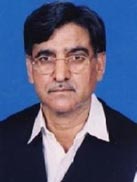
Raja Rafaqat further stated that Government took various
measures to help reestablish poultry industry following this
crisis. The proposal of providing compensation to the farmers
was not feasible that was opposed even by the farmers
themselves as it was very difficult to assess the actual
losses of individual farmers.
However, farmers were given
relief in the form of rescheduling of loans, offering easy
terms for new loans and revising duty structure. Government is
working closely with poultry farmers’ associations to help
survive this industry.
In reply to a question, Animal Husbandry Commissioner observed
satisfaction that Federal Livestock Division is working in
close harmony with its provincial counterparts. In fact,
Federal Division coordinates with international agencies and
provincial governments and it provides guidelines to provinces
whereas provinces play the operational role.
However, in
various workshops, seminars and meetings, it has observed that
provincial and district governments lack proper coordination
and even within district some confusion seems to exist between Tehsil and district administration.
For example, district
administration operates slaughter houses and is responsible
for setting up animal markets but Tehsil administration
operates and controls regular animal marketing events. But
despite such minor conflicts, overall livestock sector
situation remains normal and smooth.
Commenting on allocation of 403 million rupees for livestock
sector in current federal budget, Raja Rafaqat observed this
amount, combined with foreign assistance, is quite sufficient
keeping our absorption capacity in view.
Strengthening of
Livestock Services Project began in September 2003 with major
foreign funding aims at realizing the potential of livestock
sector by improvement of farmers’ livelihood through better
provision of livestock services, especially of disease
control, and through enhancing productivity.
In the first
phase, we are busy in setting up framework and after this we
will concentrate on the operational part of the project, he
added. The livestock losses due to various diseases are one of
our major concerns as it hampers the development process.
With
a disease control project started in 1998, we have succeeded
in rooting out Rinderpest and World Animal Health Organization
(WAHO) has declared Pakistan free of this disease.
The threat
of Foot and Mouth Disease (FMD) is still continuing and we
hope that at the completion of new project after 6 years we
will be able to bring disease losses in livestock down to
30-40%.
Raja Rafaqat told that Public Accounts Committee observed a
slow but gradual progress in livestock sector as compared to
erratic response in other areas of agriculture. We intend to
further improve the pace of progress in livestock sector.
To
fulfill WTO requirements for quality control of export of our
livestock products, we have completed National Veterinary
laboratory in Islamabad that is now functioning. Export
products certification by the laboratory will help in boosting
export earnings.
Raising livestock has been a way of life since old times in
Indus Basin and has always been basic or additional source of
income for farmers. There are abundant grazing areas in all
parts of country that promise growth of livestock and income
resource for farmers. Though drought in Cholistan retarded
this growth, we look forward to better water resources, larger
grazing areas and improved awareness in farmers to control
diseases, he observed.